
Choosing colours can be one of the most enjoyable parts of planning a tufted piece — and one of the easiest places to overcomplicate a first project. A good palette does not need many shades. It needs clear roles: a main colour, enough contrast to keep shapes readable, and one or two supporting colours that make the design feel intentional.
For a first tufting project, ask: What is the main colour? What needs to stand out? Which colour can stay quiet? If every colour is trying to be the feature, simplify the palette.
Start with three colour roles
Give each colour a job before you choose exact shades.
The colour that covers the largest or most important area.
A noticeably lighter, darker or different colour that separates shapes.
A smaller colour used to pull attention to a detail.
For many beginner designs, two or three main colours are easier to manage than a large palette. Every extra colour creates another section to plan, thread and keep separate.
If you are still deciding on the artwork itself, read How to Choose Your First Tufting Design before locking in your palette.
Choose contrast before exact shades
Two colours can look beautiful beside each other on a screen but still merge visually once they become yarn. Check whether the important parts of your design are clearly different in lightness or colour.
Take a screenshot of your design and view it in greyscale. If important shapes disappear into each other, the palette may need more contrast.
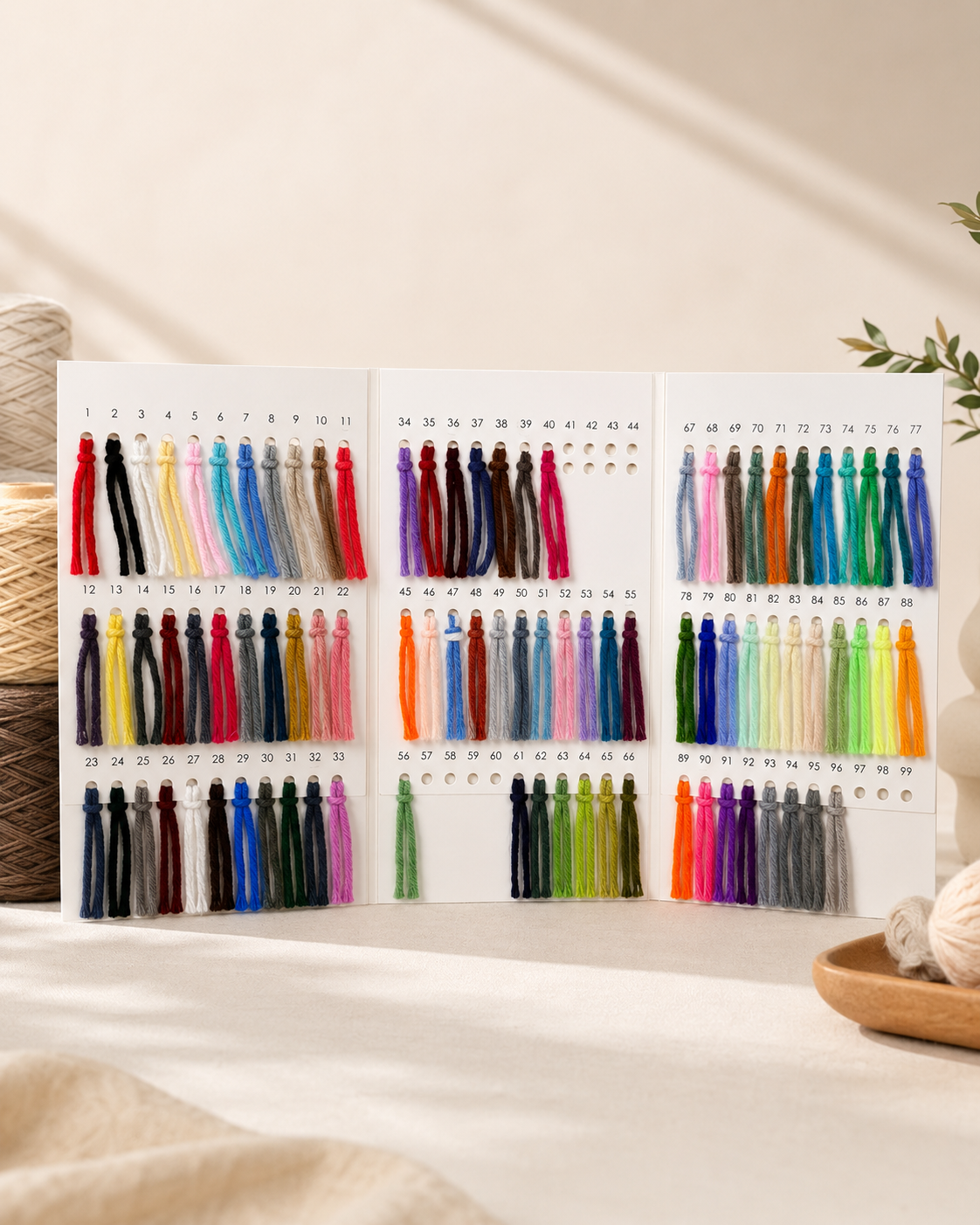
Use a physical swatch when colour accuracy matters
Screen brightness, room lighting and display settings can all change how a yarn colour appears online. If you are matching a room, artwork, logo or an existing material, a physical yarn sample is more useful than relying on a phone screen alone.
Availability can change, so build your final palette from shades that are actually available when you are ready to order. Browse the current tufting yarn colours here.
Build the palette around the largest area
Identify the colour that occupies the most space. Choose that first. Then add the outline or contrast colour, followed by any small accent.
If you need help estimating quantities after you choose the palette, use our beginner yarn-planning guide.
A five-step palette test
- Circle the largest colour area. This becomes your main colour.
- Identify the edges that must stay readable. Give neighbouring areas enough contrast.
- Remove colours that do not change the idea. Tiny variations often add work without improving a beginner design.
- Check the palette in greyscale. Make sure key shapes still separate.
- Check real yarn shades. Use a physical swatch when an exact match matters.
Common beginner colour mistakes
Too many similar colours
Several near-identical shades can make the design harder to read while adding more colour changes.
Choosing every colour separately
A palette works as a group. Put your choices beside each other before ordering.
Forgetting the final setting
A wall piece can behave like artwork, while a rug often sits beside flooring, furniture and other textiles. Compare the palette with its intended environment before you start.
FAQ
How many colours should a beginner tufting project use?
There is no fixed rule, but a limited palette is easier to plan and tuft. Two or three main colours are often enough to make a first design clear and expressive.
Do yarn colours look exactly the same online?
No. Screens and lighting can change how colours appear. If the match is important, compare physical yarn samples rather than relying only on an online image.
Should I buy all colours before I start?
For a planned design, it is useful to confirm the full palette before tufting so you can see how the colours work together.
Browse Nice Studio's current tufting yarn range, or try the process with guidance in a beginner workshop.