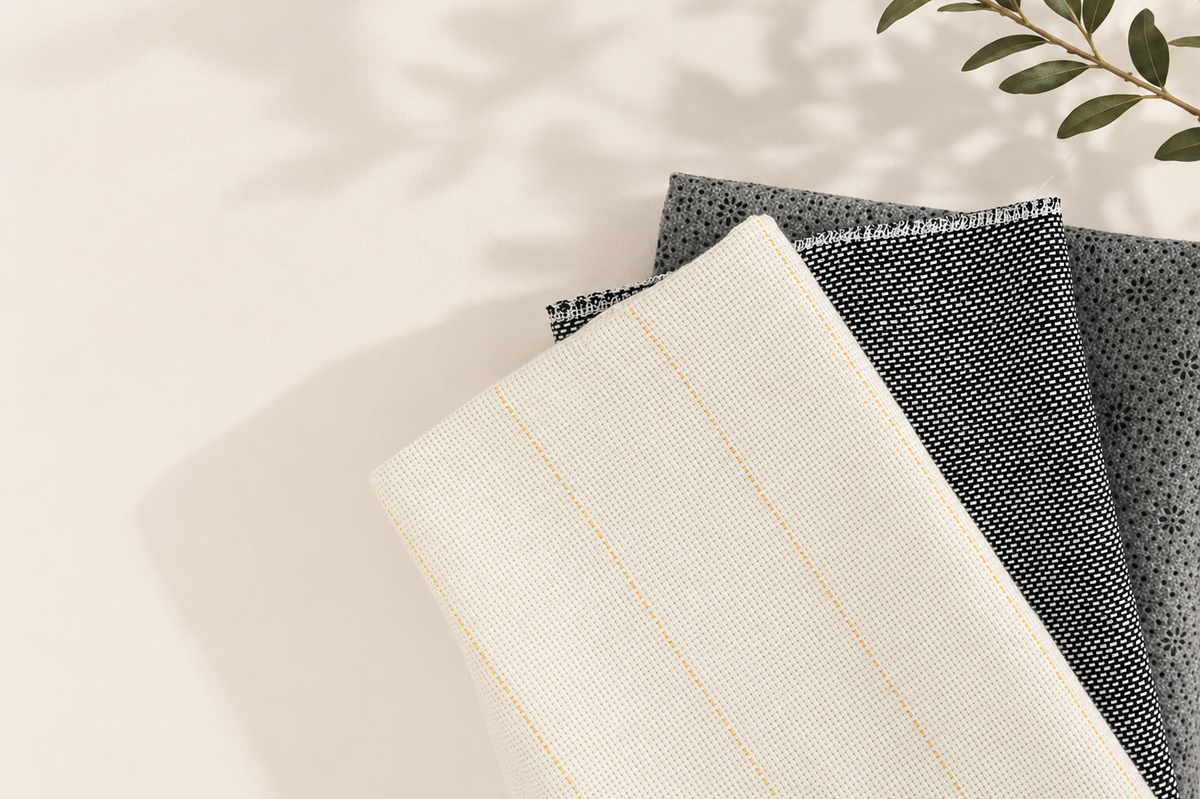
Primary tufting cloth and backing fabric do different jobs. The primary cloth is the working surface stretched over the frame. Backing fabric is added after tufting to protect and finish the reverse of the rug.
Primary cloth goes on the frame
Primary tufting cloth is woven so the needle can pass through while the structure holds the yarn in place. It needs to stay evenly stretched while you work.
A suitable primary cloth should accept the needle without tearing, hold its tension across the frame and recover around the stitches as the gun moves.
Backing fabric finishes the rug
Backing fabric is applied after the tufted surface has been secured with adhesive. It covers the working cloth and adhesive, protects the back and gives the piece a cleaner finish.
Depending on the project, you may use a woven backing, anti-slip backing or another finish designed for rugs.
What about monk's cloth?
Some monk's cloth can work, but the name alone does not guarantee the right weave or stability. Test a small area before committing to a full design. If the threads separate easily, the gun tears the weave or the cloth will not stay tight, choose a cloth made for tufting.
Allow extra cloth around the frame
The working cloth must extend beyond the design area so it can grip the frame. Current Nice Studio cloth sizes include 70 × 70cm, 100 × 100cm and 200 × 300cm.
In the starter kits, a 40 × 40cm frame comes with a 50 × 50cm cloth, while a 60 × 60cm frame comes with a 70 × 70cm cloth.
Get the tension right
- Attach the cloth from the centre of each side.
- Work towards the corners, alternating sides.
- Pull until the surface feels firm and even.
- Recheck the tension as you tuft.

Use the layers in the right order
Tuft into primary cloth first. Secure the stitches with backing adhesive, allow it to cure, then add the final backing layer. The backing fabric should not replace the primary cloth on the frame.
If you are matching cloth to an existing frame, send the inside frame dimensions through the contact page before ordering.